Best Apps
Best Habit Tracker Journals (2026) — Paper & Digital Picks

Product and habit systems research
The best habit tracker journals for combining habit tracking with reflection — from undated paper planners to digital journaling. Find the right format for you.
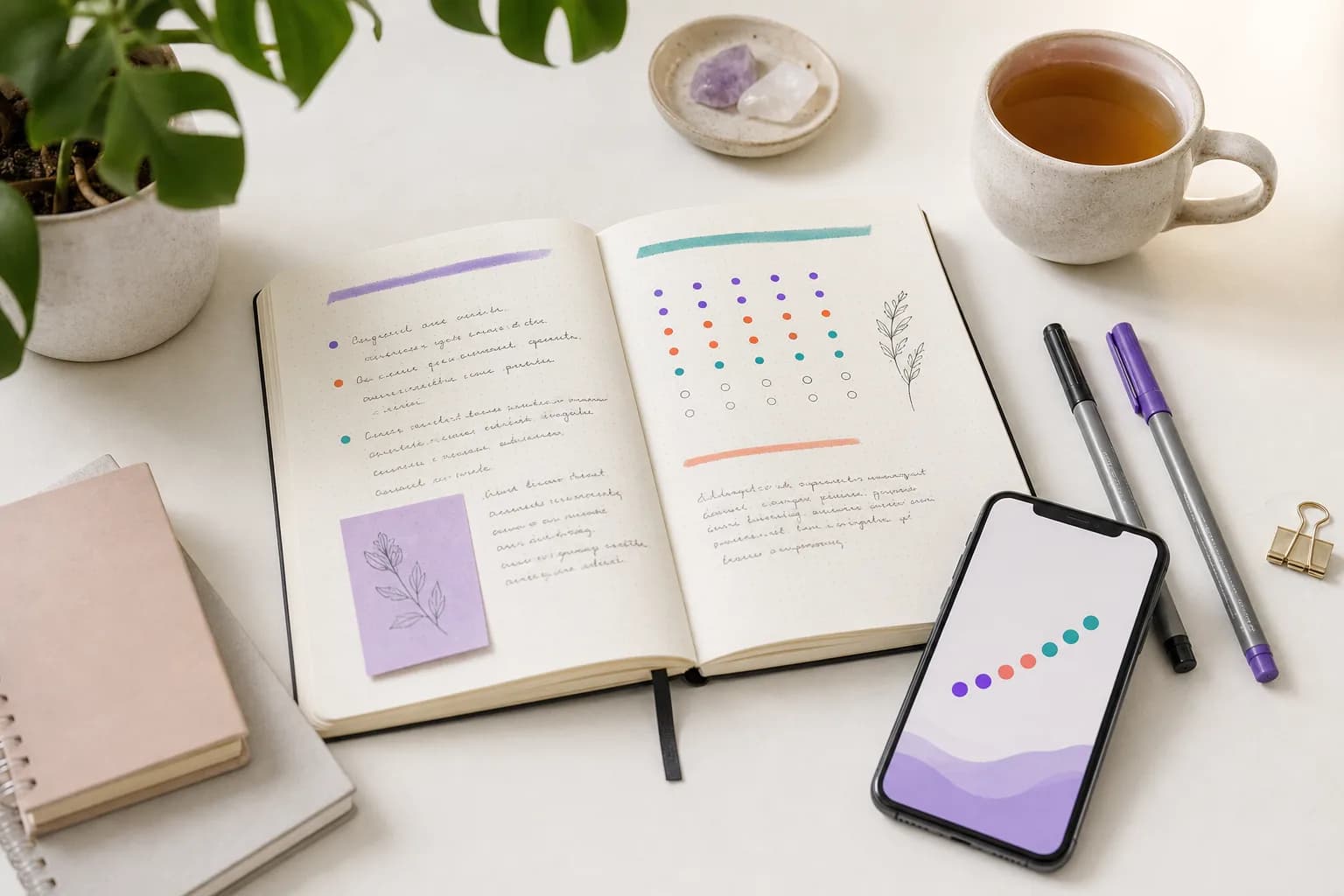
The best habit tracker journal combines two things that reinforce each other: a grid for marking habits and space for a few lines of reflection on why they did or didn't happen. That reflection is what turns a tracker into real change. Below are the best options across paper and digital. Check current availability and pricing before buying.
Best digital habit tracker + journal: SelfSpark
SelfSpark is an adaptive habit tracker with built-in smart journaling — so the tracking and the reflection live together. It suggests a smaller version of a habit on low-energy days, keeps progress visible after a miss, and prompts short notes that reveal why a habit slipped. Available on Android and web. Best for: people who want the reflection benefits of a journal without the daily friction of writing pages. Take the habit fit quiz.
Best paper habit journals: guided planners
Dedicated habit journals and guided planners (undated 90-day or yearly formats) combine habit grids with prompts and goal pages. Best for: people who love writing by hand and a tactile ritual.
Best DIY paper option: bullet journal
A bullet journal lets you design your own tracker-plus-journal in one notebook. Best for: people who want full control over layout. See the bullet journal habit tracker guide.
Best printable option: print-at-home journal pages
If you want paper without buying a book, print habit grids and reflection pages. Grab the free printable habit tracker PDFs and pair them with a notes page.
Best spreadsheet option: tracker with a notes column
Add a "notes" column to a Google Sheets or Excel tracker for lightweight digital journaling alongside your habit data.
How to choose a habit tracker journal
- Decide paper vs. digital. Paper is tactile and distraction-free; digital adds reminders, search, and recovery features.
- Make sure it has room for reflection, not just checkboxes — that's the part that creates change.
- Keep journaling short. One sentence you'll actually write beats a page you'll skip.
- Pick something portable so you'll keep it up daily.
See also habit tracker ideas and habits to track.
FAQ
What is a habit tracker journal?
It's a journal that combines a habit-tracking grid with space for reflection, so you record both whether you did a habit and a short note on why. The reflection is what makes it more powerful than a plain tracker.
Are paper or digital habit journals better?
Paper is tactile and free of distraction; digital adds reminders, search, and recovery features. The best choice is whichever you'll actually use every day — many people start on paper and move to an app.
How much should I write in a habit journal?
Keep it to one or two sentences per day. Short, consistent notes ("skipped walk — rained, tired") are far more sustainable and useful than long entries you'll eventually skip.
What's the best habit tracker journal app?
An app that pairs tracking with quick journaling, like SelfSpark, so reflection happens in the same place you mark habits — and it adapts when you miss a day instead of breaking your streak.
Bottom line
The best habit tracker journal puts tracking and reflection side by side. For that combination without the friction of writing pages, try SelfSpark — or print the free PDFs if you prefer paper.
How to turn this guide into a habit plan
Read the article once for the idea, then choose one action small enough to do on a busy day. SelfSpark works best when a habit has a full version, a reduced version, and a recovery version. The full version is what you do on a normal day. The reduced version is the smallest useful action when energy is low. The recovery version is what gets you moving again after a missed day without treating the miss as failure.
If this article compares tools, use it to decide what support you need before you pick an app. If it explains a template or habit method, write down the exact trigger, the minimum action, and how you will restart after an interruption. A good habit system should make the next step obvious when you are tired, distracted, traveling, or already behind.
SelfSpark is designed around that kind of recovery-friendly tracking. The quiz helps you choose a first plan, the tracker keeps progress visible, and short journal notes help you learn why a habit slipped so the next plan can adapt instead of becoming another rigid streak.
For the next seven days, treat the habit as an experiment. Keep the target small, write down what made it easier or harder, and adjust the plan based on what actually happened. That feedback loop is usually more useful than a perfect schedule you only follow once.