Comparisons
SelfSpark vs Streak-Based Habit Apps

Product and habit systems research
Compare SelfSpark with generic streak-based habit apps, including missed-day recovery, journaling, adaptive targets, and who each option fits.
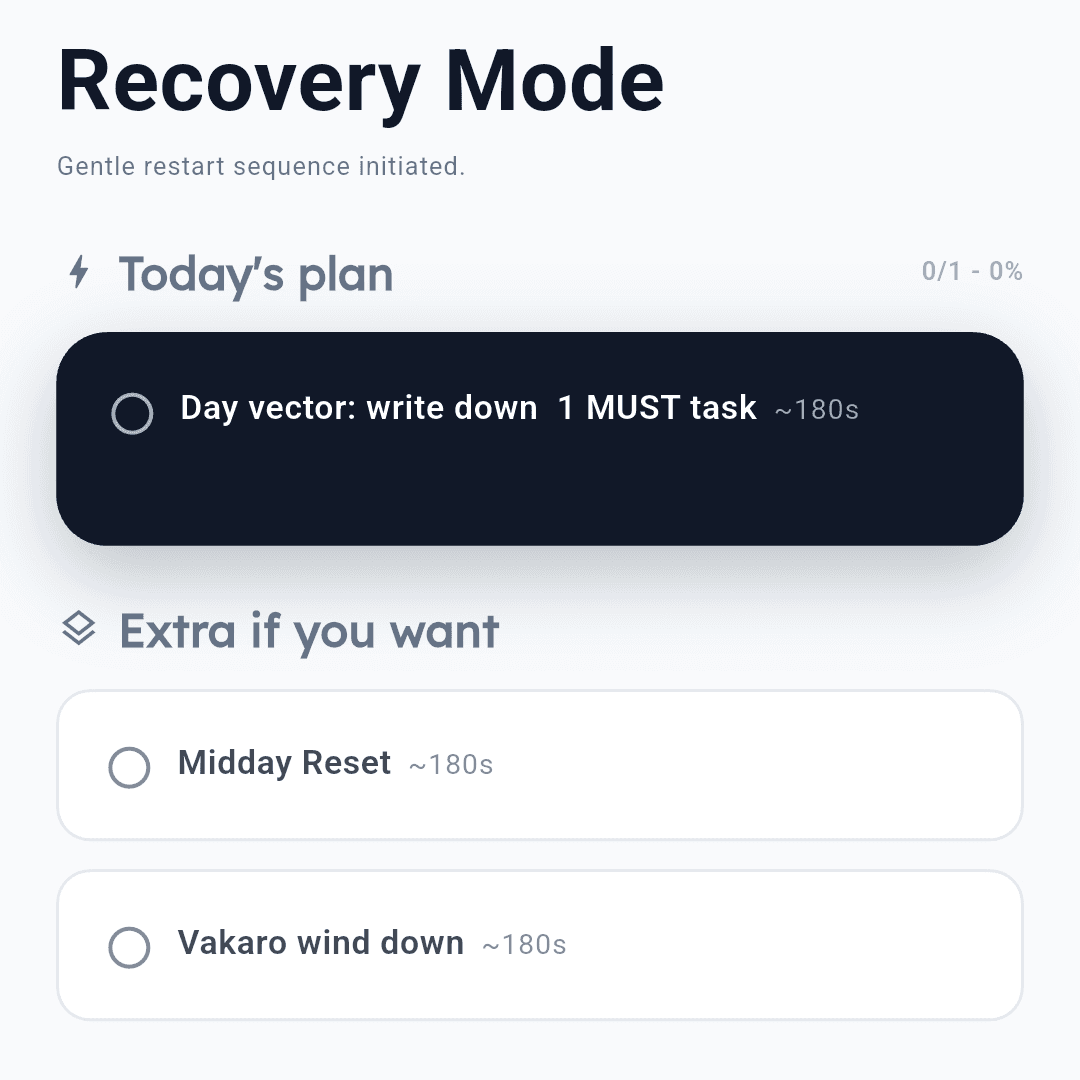
SelfSpark is different from streak-based habit apps because it treats disruption as part of the system. A streak app usually rewards uninterrupted completion. SelfSpark focuses on adaptive next steps, Recovery Mode, and short journaling so users can return after missed days without feeling like progress disappeared.
SelfSpark vs streak apps
| Criteria | SelfSpark | Streak-based habit apps |
|---|---|---|
| Primary goal | Sustainable consistency through real-life interruptions | Consecutive completions |
| Missed day | Smaller next action and recovery framing | Broken streak or missed check |
| Habit target | Adaptive to capacity | Usually fixed by the user |
| Journaling | Short notes for context and patterns | Often absent or separate |
| Best for | People who restart after misses and want less pressure | People who enjoy streak pressure |
Where streak apps are strong
Streak apps are simple, fast, and motivating for people who like seeing consecutive days build. If your routine is already stable, a streak app can be enough.
Where SelfSpark is stronger
SelfSpark is stronger when your problem is not starting, but returning. If travel, stress, sleep, workload, or energy changes keep disrupting the plan, SelfSpark gives the habit a smaller version instead of asking you to pretend every day is the same.
How to decide
- If streaks feel fun, a streak app may fit.
- If streaks make you anxious, choose a recovery-friendly tracker.
- If your targets are too big on hard days, choose an adaptive tracker.
- If you want to understand why habits slip, choose a tracker with simple notes.
For a broader roundup, see best habit tracker apps. For the underlying approach, read what is a recovery-friendly habit tracker.
Sources
- Phillippa Lally, Cornelia H. M. van Jaarsveld, Henry W. W. Potts, and Jane Wardle, "How are habits formed: Modelling habit formation in the real world," European Journal of Social Psychology, 2010. Wiley DOI page.
- Benjamin Gardner, Phillippa Lally, and Jane Wardle, "Making health habitual: the psychology of 'habit-formation' and general practice," British Journal of General Practice, 2012. Full text at PMC.
FAQ
Is SelfSpark better than streak-based habit apps?
SelfSpark is better if strict streaks make you quit after missed days. A streak app may be better if consecutive completion is the main thing that motivates you.
Does SelfSpark reset progress after one missed day?
SelfSpark is designed around recovery and adaptive next steps, not treating one missed day as a full reset.
Who should try SelfSpark?
Try SelfSpark if you start habits often but lose momentum when life gets busy, or if you want a tracker that helps you return after disruption. Take the habit fit quiz to start.
Bottom line
Streak apps reward perfect runs. SelfSpark helps when the run breaks and you still want a practical way back.
How to turn this guide into a habit plan
Read the article once for the idea, then choose one action small enough to do on a busy day. SelfSpark works best when a habit has a full version, a reduced version, and a recovery version. The full version is what you do on a normal day. The reduced version is the smallest useful action when energy is low. The recovery version is what gets you moving again after a missed day without treating the miss as failure.
If this article compares tools, use it to decide what support you need before you pick an app. If it explains a template or habit method, write down the exact trigger, the minimum action, and how you will restart after an interruption. A good habit system should make the next step obvious when you are tired, distracted, traveling, or already behind.
SelfSpark is designed around that kind of recovery-friendly tracking. The quiz helps you choose a first plan, the tracker keeps progress visible, and short journal notes help you learn why a habit slipped so the next plan can adapt instead of becoming another rigid streak.
For the next seven days, treat the habit as an experiment. Keep the target small, write down what made it easier or harder, and adjust the plan based on what actually happened. That feedback loop is usually more useful than a perfect schedule you only follow once.