Templates
Free Monthly Habit Tracker (Printable PDF & Template)

Product and habit systems research
Download a free monthly habit tracker — one page per month to see streaks at a glance. Printable PDF in A4 and Letter, plus spreadsheet and digital options.
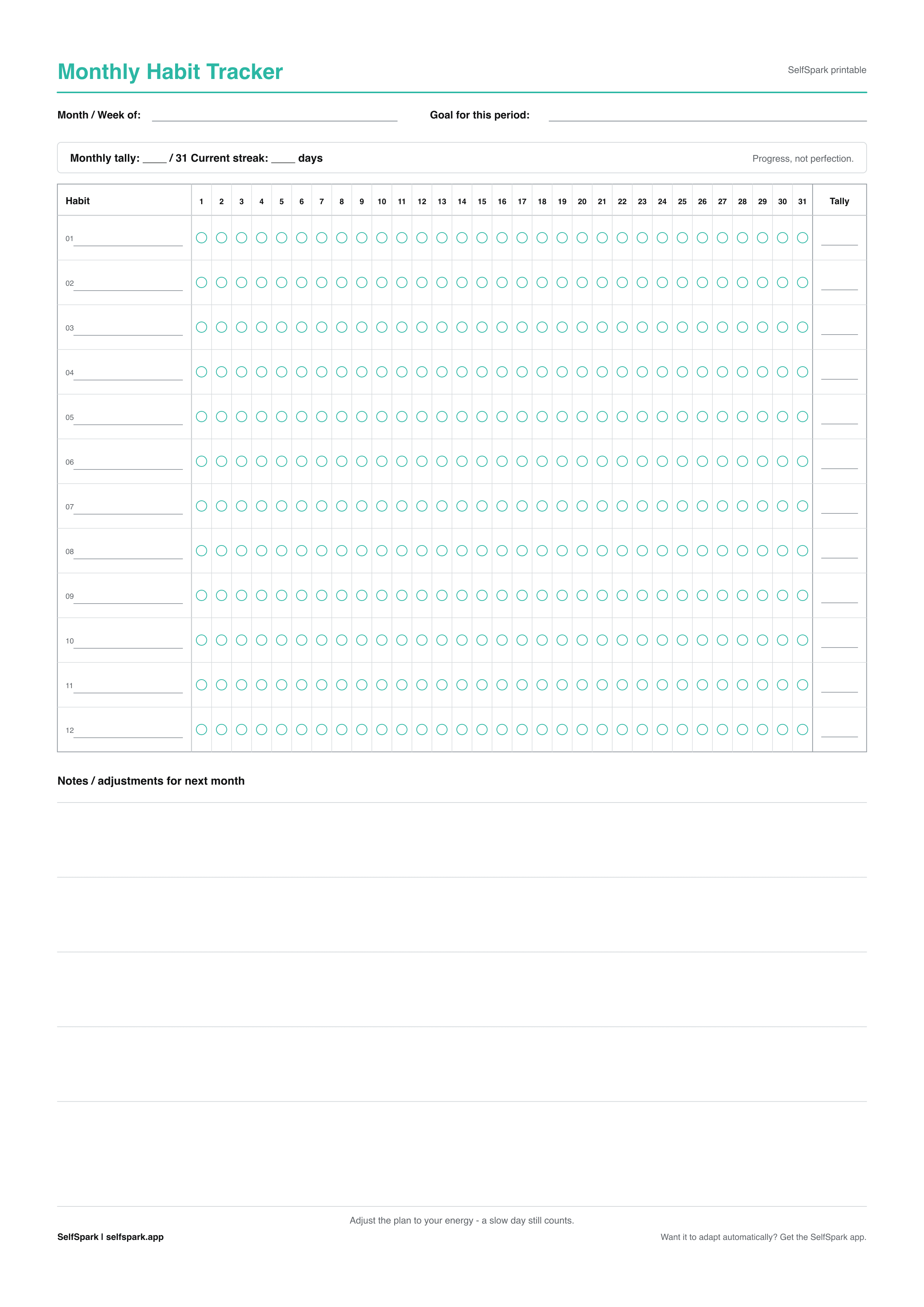
A monthly habit tracker is a single page covering a whole month, so you can mark a habit every day and see your streaks and patterns at a glance. It's the best layout for spotting trends — a full month of ticks (or gaps) tells you far more than a single week. Download the free printable below or use a digital version.
Download the monthly habit tracker (PDF)
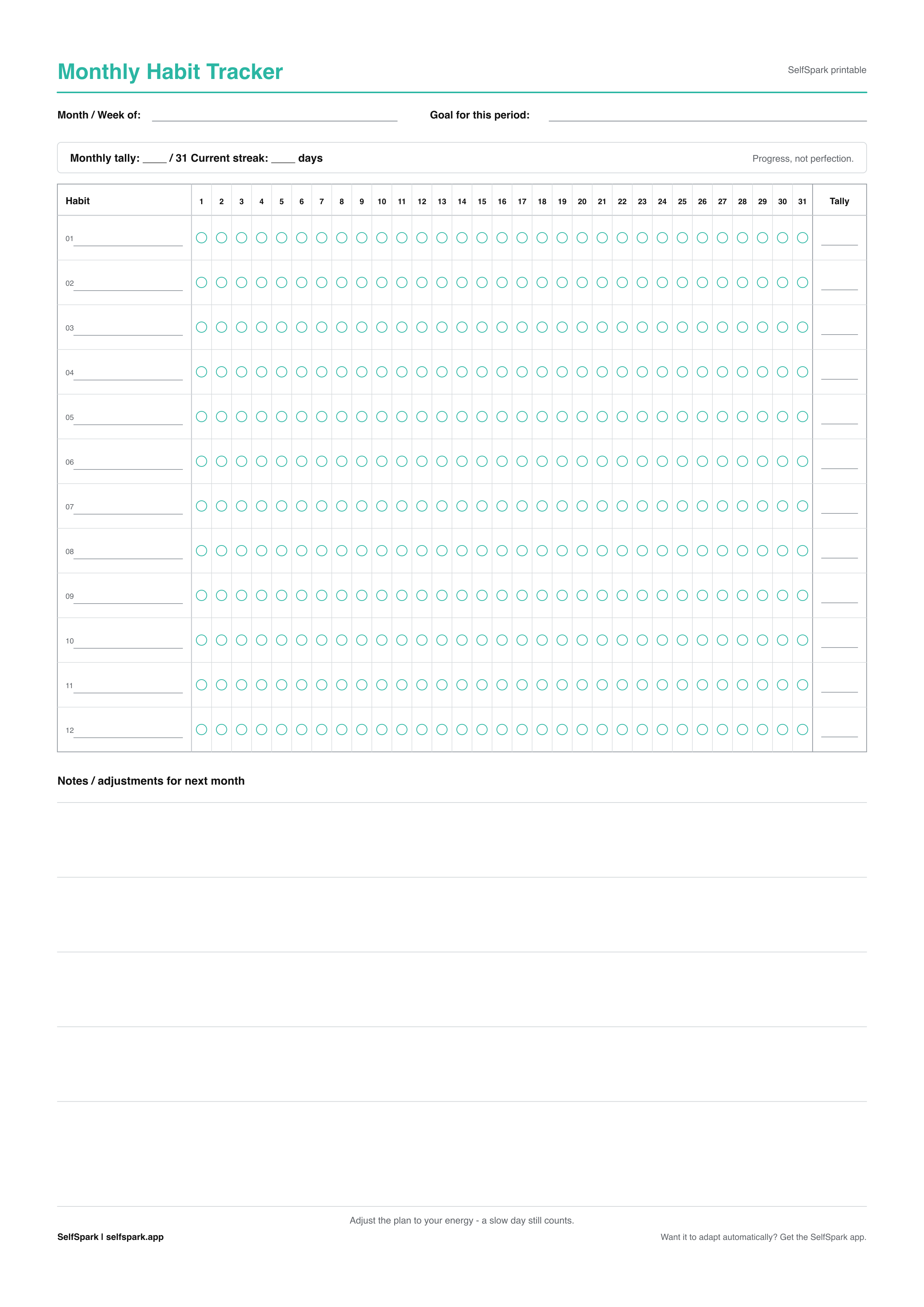
Free, ready-to-print monthly layouts:
Want daily and weekly layouts too? See all the printable habit tracker PDFs.
Why use a monthly habit tracker?
- See streaks at a glance — a whole month on one page makes momentum visible.
- Spot patterns — you'll notice if a habit always slips on weekends or busy weeks.
- Less clutter — one page per month instead of a new sheet each week.
- Great for keystone habits — track one or a few important habits across the month.
A monthly view is ideal once a habit is established. While you're first building a habit, a daily or weekly tracker can give more frequent feedback.
How to use it
- Write your habits down the side (a handful works best for monthly).
- Mark each day as you complete the habit.
- At month-end, review which rows are full and which slipped — and why.
- Carry forward the habits that matter into next month's page.
For what to track, see habits to track; for layout inspiration, see habit tracker ideas.
Digital monthly trackers
Prefer digital? The Google Sheets template and Notion habit tracker both support monthly views with automatic totals.
The limit of a monthly grid
A monthly tracker shows the whole month, which means a run of blank days after a hard week is right there in front of you — discouraging exactly when you need encouragement. The grid can't suggest a smaller step or help you restart.
SelfSpark can: it's an adaptive habit tracker that suggests a smaller version of a habit on low-energy days and keeps progress visible after a miss, so one rough week doesn't define your month. Take the habit fit quiz.
FAQ
What is a monthly habit tracker?
It's a single page covering a whole month, with habits as rows and the days of the month as columns, so you can see streaks and patterns across the entire month at a glance.
Is the monthly habit tracker free?
Yes. The monthly printable PDFs above are free to download and print in A4 and US Letter, in colour or black & white.
How many habits should I track on a monthly sheet?
A handful — monthly layouts work best for one to a few keystone habits. For many habits at once, a weekly layout gives more room.
Monthly vs. weekly habit tracker — which is better?
Weekly gives more frequent feedback while you're building a habit; monthly is better for seeing long-term streaks and patterns once a habit is established. Many people use both.
Bottom line
A monthly habit tracker shows your whole month on one page, making streaks and patterns obvious. Download the free printable, and for a tracker that helps you recover after a rough week, try SelfSpark.
How to turn this guide into a habit plan
Read the article once for the idea, then choose one action small enough to do on a busy day. SelfSpark works best when a habit has a full version, a reduced version, and a recovery version. The full version is what you do on a normal day. The reduced version is the smallest useful action when energy is low. The recovery version is what gets you moving again after a missed day without treating the miss as failure.
If this article compares tools, use it to decide what support you need before you pick an app. If it explains a template or habit method, write down the exact trigger, the minimum action, and how you will restart after an interruption. A good habit system should make the next step obvious when you are tired, distracted, traveling, or already behind.
SelfSpark is designed around that kind of recovery-friendly tracking. The quiz helps you choose a first plan, the tracker keeps progress visible, and short journal notes help you learn why a habit slipped so the next plan can adapt instead of becoming another rigid streak.
For the next seven days, treat the habit as an experiment. Keep the target small, write down what made it easier or harder, and adjust the plan based on what actually happened. That feedback loop is usually more useful than a perfect schedule you only follow once.