Blog
How to Prioritize Tasks When Everything Feels Important

Neuroscientist · attention, motivation & behavior research
A practical way to choose the next useful task, reduce overwhelm, and keep moving without rebuilding your whole system.
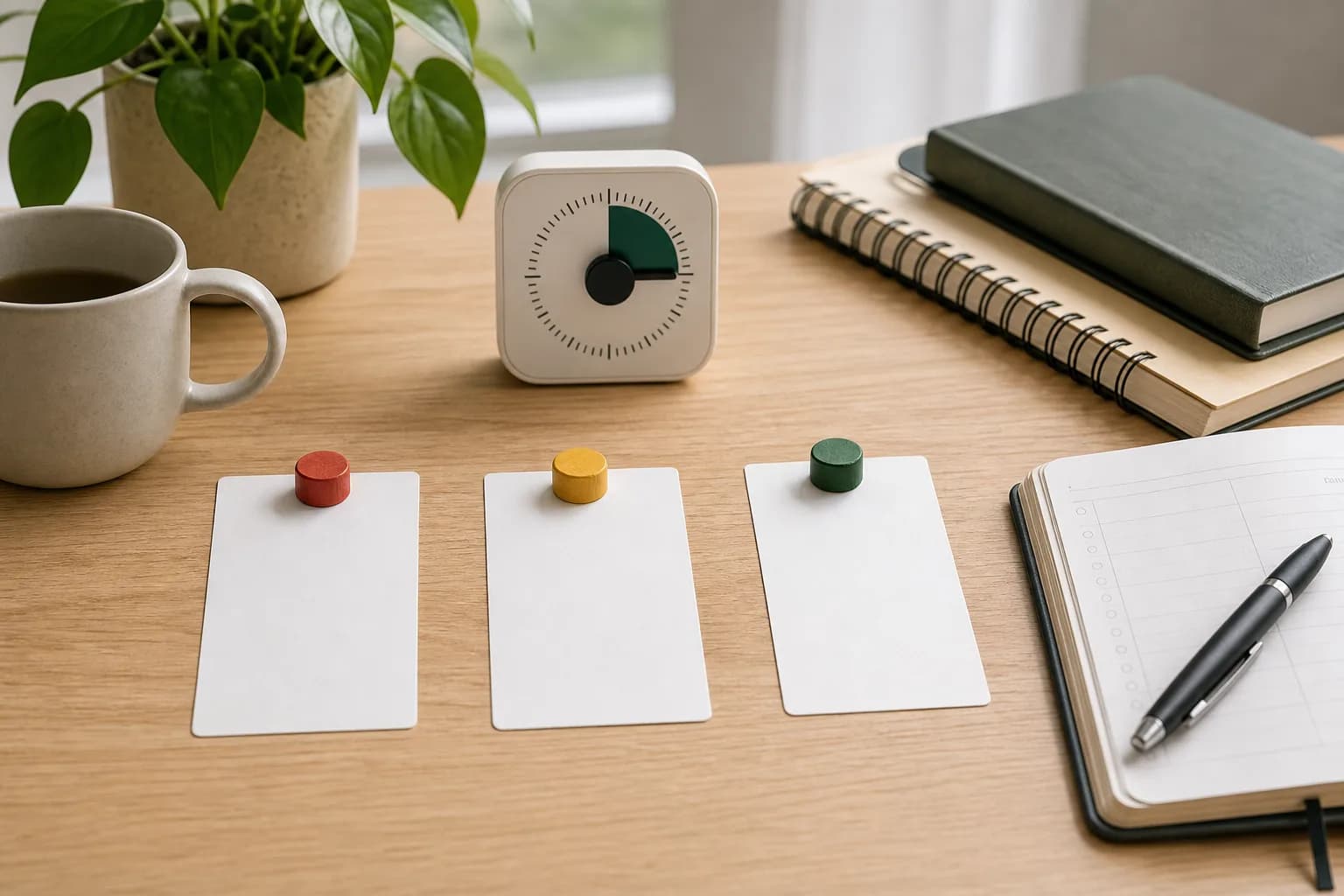
When every task feels urgent, making a list can make the pressure worse. You can see all the work, but you still cannot tell where to begin.
The useful move is not to create a perfect ranking. It is to choose one next task with enough reason behind it, then make that task small enough to start. Prioritization should reduce hesitation, not become another project.
Start With Consequences, Not Mood
Your attention will naturally lean toward whatever is loud, easy, or uncomfortable. That does not make it the most important task.
For each task, ask two questions:
- What becomes harder if I leave this until tomorrow?
- Does completing this unblock another person or another task?
A task with a real deadline, a waiting collaborator, or a clear downstream effect usually deserves attention before a task that merely feels active. If several tasks still look equal, choose the one that removes the most uncertainty.
This is especially useful when overwhelm makes every decision feel heavier. You do not need to solve the whole week. You need one defensible next move.
Separate the Priority From the Size
An important task can still be too large to begin. “Finish the proposal” may be the right priority, but it is not a useful next action.
Translate it into something visible and short:
- Open the proposal and write the three section headings.
- Check the deadline and list the missing inputs.
- Draft the first paragraph without editing it.
This keeps you from mistaking difficulty for lack of motivation. If you regularly postpone a task after choosing it, use the same small-start approach from how to stop delaying tasks.
Use a Normal Version and a Low-Energy Version
A priority system should still work on a difficult day. Give the task two versions before you begin.
The normal version might be 30 focused minutes. The low-energy version might be opening the file, reviewing the last note, and adding one useful sentence. Both versions maintain contact with the work.
The smaller version is not a loophole. It is a recovery path. It prevents one low-capacity day from becoming a full week of avoidance. This is the same principle behind a recovery-friendly habit tracker: progress should survive changing energy.
Try It in SelfSpark
Use a short daily loop instead of repeatedly reorganizing your entire task list:
- Write down the three tasks currently pulling at your attention.
- Circle the one with the clearest consequence or unblocking effect.
- Define a normal version and a five-minute version.
- After working, note what helped you start or what got in the way.
Track the return as well as the completion. If you drift, record the smallest action that brought you back. Those notes can reveal whether the real problem is unclear tasks, unrealistic timing, or too many competing commitments. If time estimates are the recurring issue, read how to recover from poor time management.
FAQ
What if two tasks are equally important?
Choose the one that unblocks more future work. If neither does, choose the shorter task and use the saved attention for the second one. A reasonable choice made now is usually more useful than another round of ranking.
How many priorities should I have each day?
Keep one main priority and, at most, two secondary tasks. A longer list can still exist, but it should not compete with the next action in front of you.
What if I choose the wrong task?
Review after a short work block. Prioritization is a decision you can update, not a promise you must defend all day. Use what you learned to choose the next block more accurately.
If you want a routine shaped around how you actually follow through, take the habit fit quiz. Start with one priority, make it small enough to begin, and let the next decision wait until you have finished the first useful step.
How to turn this guide into a habit plan
Read the article once for the idea, then choose one action small enough to do on a busy day. SelfSpark works best when a habit has a full version, a reduced version, and a recovery version. The full version is what you do on a normal day. The reduced version is the smallest useful action when energy is low. The recovery version is what gets you moving again after a missed day without treating the miss as failure.
If this article compares tools, use it to decide what support you need before you pick an app. If it explains a template or habit method, write down the exact trigger, the minimum action, and how you will restart after an interruption. A good habit system should make the next step obvious when you are tired, distracted, traveling, or already behind.
SelfSpark is designed around that kind of recovery-friendly tracking. The quiz helps you choose a first plan, the tracker keeps progress visible, and short journal notes help you learn why a habit slipped so the next plan can adapt instead of becoming another rigid streak.
For the next seven days, treat the habit as an experiment. Keep the target small, write down what made it easier or harder, and adjust the plan based on what actually happened. That feedback loop is usually more useful than a perfect schedule you only follow once.