Templates
Habit Tracker Journal — How to Combine Tracking & Reflection

Product and habit systems research
A habit tracker journal pairs a habit grid with short daily reflection. Learn how to set one up, what to write, and get free printable and digital templates.
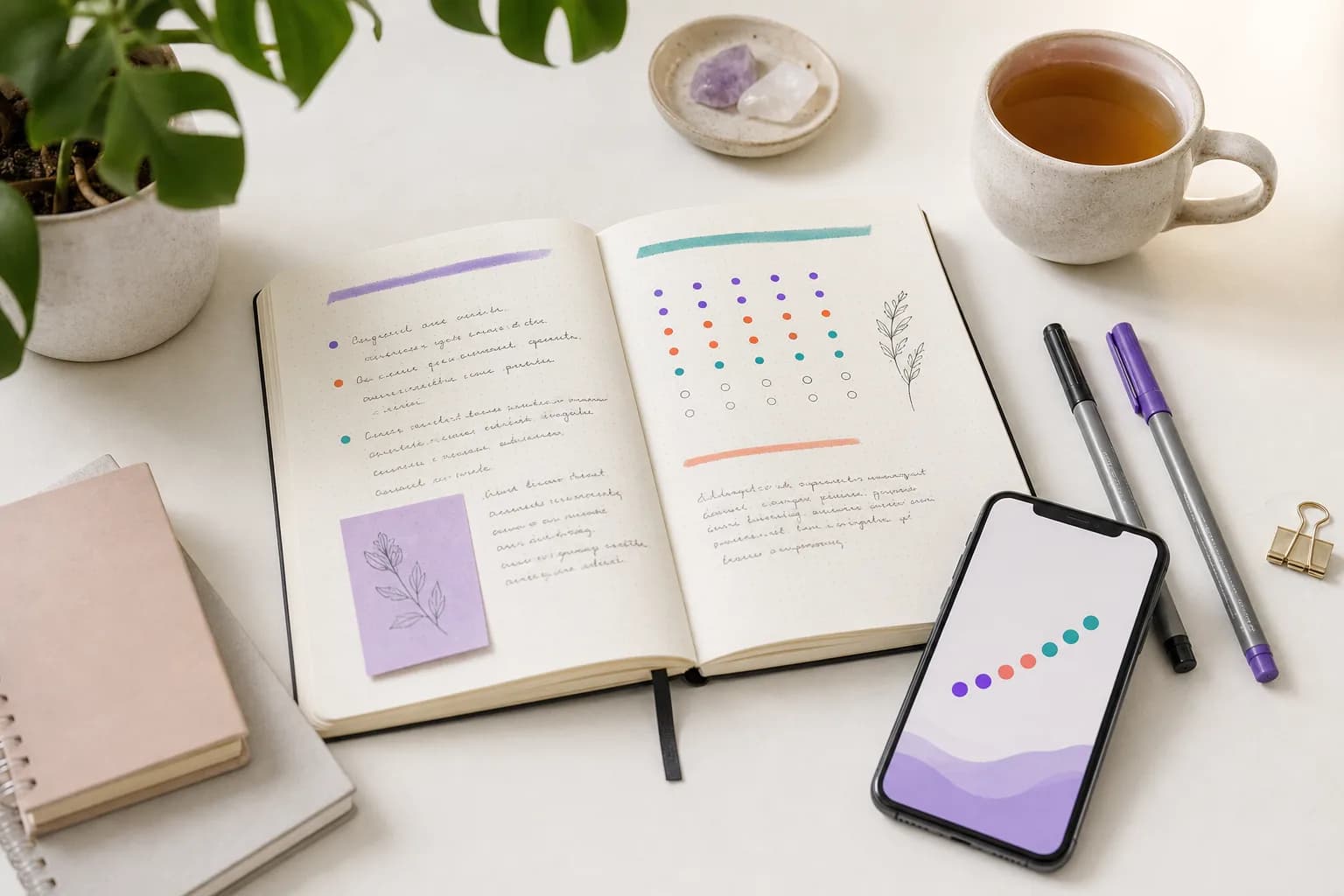
A habit tracker journal combines two things: a grid where you mark off habits each day, and space for a sentence or two of reflection on why they did or didn't happen. The tracking builds consistency; the reflection turns slip-ups into insight. Together they're far more powerful than either alone. Here's how to set one up, plus free templates.
Why pair tracking with journaling?
A plain tracker tells you what happened — a row of ticks and blanks. A journal tells you why. When you note "skipped walk — rained, exhausted" next to a missed box, a pattern eventually emerges: maybe habits slip after late meetings, poor sleep, or over-ambitious mornings. Once the pattern is visible, you can make the plan kinder and more realistic. Reflection is where lasting change actually happens.
How to set up a habit tracker journal
- Add a habit grid — habits as rows, days as columns. Use the free printable or a bullet journal layout.
- Leave a reflection space — a few lines per day or a box at the end of each week.
- Mark habits as you do them, then add one short note.
- Review weekly — read your notes and look for patterns.
- Adjust the plan based on what you learn.
What to write (keep it short)
One sentence is enough. Useful prompts:
- What made this habit easier today?
- What got in the way?
- What should be smaller next time?
- What gave me energy?
- What warning sign did I notice?
The goal is a note you'll actually write every day, not a diary entry you'll abandon.
Free habit journal templates
- Printable: the habit tracker PDFs plus a notes page.
- Spreadsheet: add a "notes" column to the Google Sheets or Excel tracker.
- Notion: add a text property to the Notion habit tracker.
- Paper: design your own in a bullet journal.
The easiest habit journal: built-in smart journaling
Keeping a separate grid and journal in sync takes discipline. SelfSpark combines both: it's an adaptive habit tracker with smart journaling, so your reflection lives right where you mark habits. It also suggests a smaller version of a habit on hard days and keeps progress visible after a miss — turning your notes into real insight without the friction of writing pages. Take the habit fit quiz.
See also best habit tracker journals and habits to track.
FAQ
What is a habit tracker journal?
It's a journal that combines a habit-tracking grid with space for short daily reflection, so you record both whether you did a habit and a note on why — which makes patterns visible.
How much should I write in a habit journal?
One or two sentences a day. Short, consistent notes are far more sustainable and useful than long entries you'll eventually stop writing.
How do I start a habit journal?
Add a habit grid, leave room for a few lines of reflection, mark habits as you do them with a short note, and review weekly to spot patterns and adjust your plan.
Is paper or a digital habit journal better?
Paper is tactile and distraction-free; digital keeps tracking and notes in sync automatically and adds recovery features. Choose whichever you'll actually keep up — or use an app like SelfSpark that combines both.
Bottom line
A habit tracker journal pairs a grid with short reflection so you learn why habits slip, not just that they did. For tracking and journaling in one place, try SelfSpark.
How to turn this guide into a habit plan
Read the article once for the idea, then choose one action small enough to do on a busy day. SelfSpark works best when a habit has a full version, a reduced version, and a recovery version. The full version is what you do on a normal day. The reduced version is the smallest useful action when energy is low. The recovery version is what gets you moving again after a missed day without treating the miss as failure.
If this article compares tools, use it to decide what support you need before you pick an app. If it explains a template or habit method, write down the exact trigger, the minimum action, and how you will restart after an interruption. A good habit system should make the next step obvious when you are tired, distracted, traveling, or already behind.
SelfSpark is designed around that kind of recovery-friendly tracking. The quiz helps you choose a first plan, the tracker keeps progress visible, and short journal notes help you learn why a habit slipped so the next plan can adapt instead of becoming another rigid streak.
For the next seven days, treat the habit as an experiment. Keep the target small, write down what made it easier or harder, and adjust the plan based on what actually happened. That feedback loop is usually more useful than a perfect schedule you only follow once.