Blog
Habit Tracking 101 — A Complete Starter Guide

Founder of SelfSpark · 15 years exploring self-help & personal growth
New to habit tracking? This starter guide covers what to track, how to set up a tracker, free templates and tools to use, and how to keep going after a missed day.
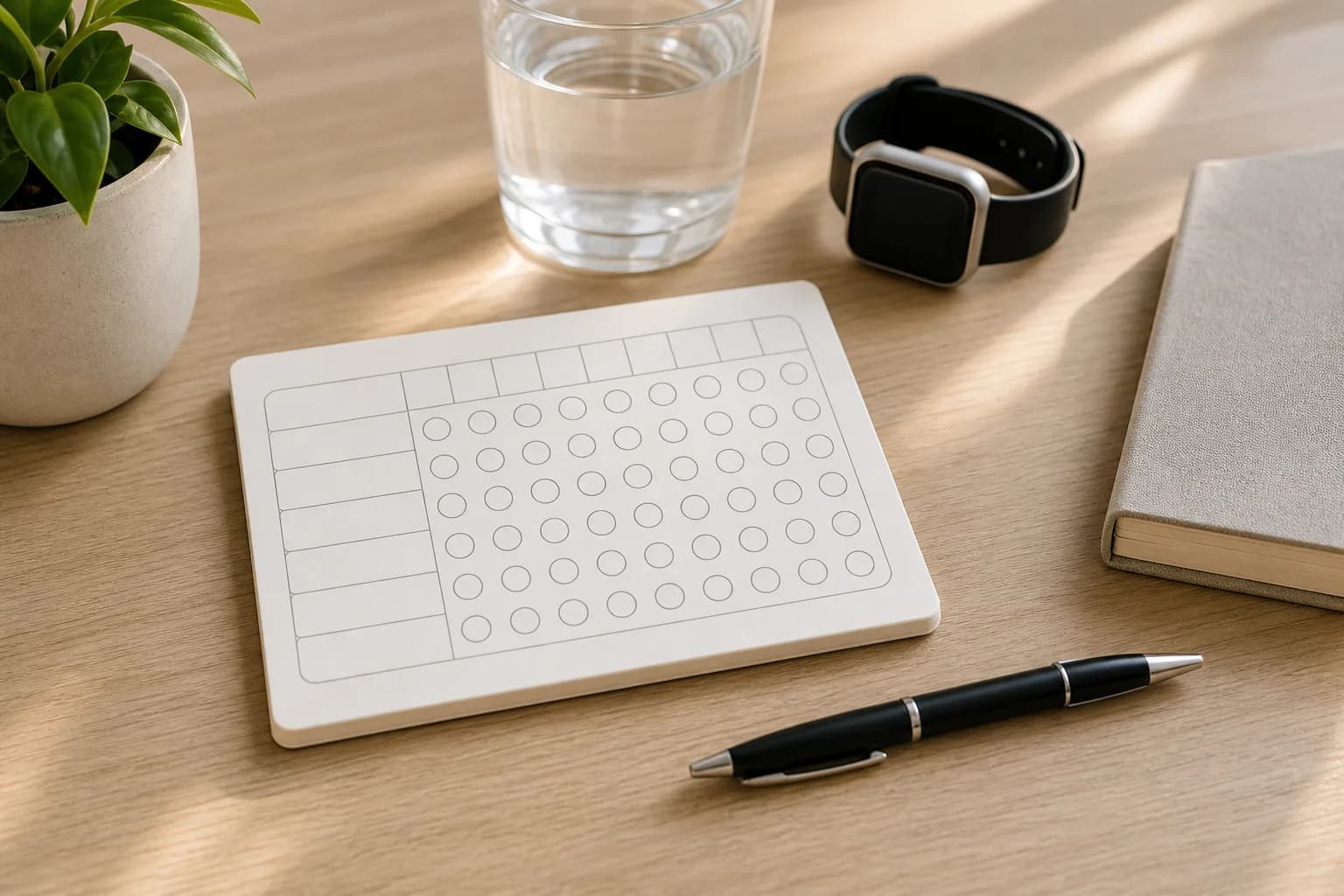
Habit tracking is simply the practice of marking off a habit each day so progress stays visible — and that small act of making the invisible visible is what makes habits easier to start and keep. If you're brand new, this is the whole starter path in one place, with links to everything free you'll need.
1. Understand what a habit tracker is
A habit tracker turns a behaviour into a record you can see, which gives you feedback and a streak you don't want to break. Start with the basics: what is a habit tracker.
2. Choose what to track
Pick two or three small, specific habits tied to a goal — not ten. The most common beginner mistake is tracking too much at once. See habits to track for a goal-by-goal list and habit tracker ideas for inspiration.
3. Set up your tracker
Lay out a grid — habits as rows, days as columns — and attach each habit to a time of day. The full walkthrough: how to set up a habit tracker, or build your own with how to make a habit tracker.
4. Grab a free template
You don't have to start from scratch:
- Printable PDF habit trackers (daily, weekly, monthly)
- Google Sheets template (auto-counts streaks)
- Notion habit tracker
- Bullet journal layouts
Browse them all on the templates page.
5. Try a tool to build self-awareness
Before changing habits, it helps to see your current ones clearly. The Atomic Habits Scorecard is a simple, free worksheet for exactly that.
6. Learn to use it (and recover when you slip)
The make-or-break skill isn't marking habits — it's what you do after a missed day. Read how to use a habit tracker and our guide to a recovery-friendly approach. The rule that matters most: never miss twice in a row, and do a smaller version rather than nothing.
7. Pick your long-term tool
Once you know how you behave, choose the right home for your habits — paper, spreadsheet, or app. Our guide how to choose the right habit tracker walks through it, and the best habit tracker apps covers the app options.
Bottom line
Start tiny: pick one habit, grab a free template, mark it today. Momentum compounds from there. When you want a tracker that adapts to your energy and helps you bounce back after a miss, take the 2-minute habit fit quiz.
How to turn this guide into a habit plan
Read the article once for the idea, then choose one action small enough to do on a busy day. SelfSpark works best when a habit has a full version, a reduced version, and a recovery version. The full version is what you do on a normal day. The reduced version is the smallest useful action when energy is low. The recovery version is what gets you moving again after a missed day without treating the miss as failure.
If this article compares tools, use it to decide what support you need before you pick an app. If it explains a template or habit method, write down the exact trigger, the minimum action, and how you will restart after an interruption. A good habit system should make the next step obvious when you are tired, distracted, traveling, or already behind.
SelfSpark is designed around that kind of recovery-friendly tracking. The quiz helps you choose a first plan, the tracker keeps progress visible, and short journal notes help you learn why a habit slipped so the next plan can adapt instead of becoming another rigid streak.
For the next seven days, treat the habit as an experiment. Keep the target small, write down what made it easier or harder, and adjust the plan based on what actually happened. That feedback loop is usually more useful than a perfect schedule you only follow once.